
Founded in late 2015 in Taichung, Taiwan, Acme Gamestudio is an independent development studio comprised of developers with experience in major international studios. The team is dedicated to creating single-player games for console and PC, applying advanced technology and iterative design to craft experiences that combine artistic vision with commercial appeal. The studio’s first title, Asterigos , is a Souls-like ARPG released on Steam, Nintendo Switch, and PlayStation, and it achieved a warm reception from both players and critics.
-
Overview
Served as the sole Level & Systems Designer on a co-op, top-down action roguelite. Leading designer of encounter systems, randomized level structure system, and Blueprint prototypes implementation to align gameplay with art/narrative and production goals.
-
My Work Impact Highlights in AcmeGamestudio
-
Cut cross-team rework with standardized flowcharts & data schemas;
-
shipped reusable spawn/encounter templates;
-
accelerated concept→prototype loop with UE Blueprint proofs.
-
Responsible for level part and help this project signed with a publisher
-
-
Test Overveiw
-
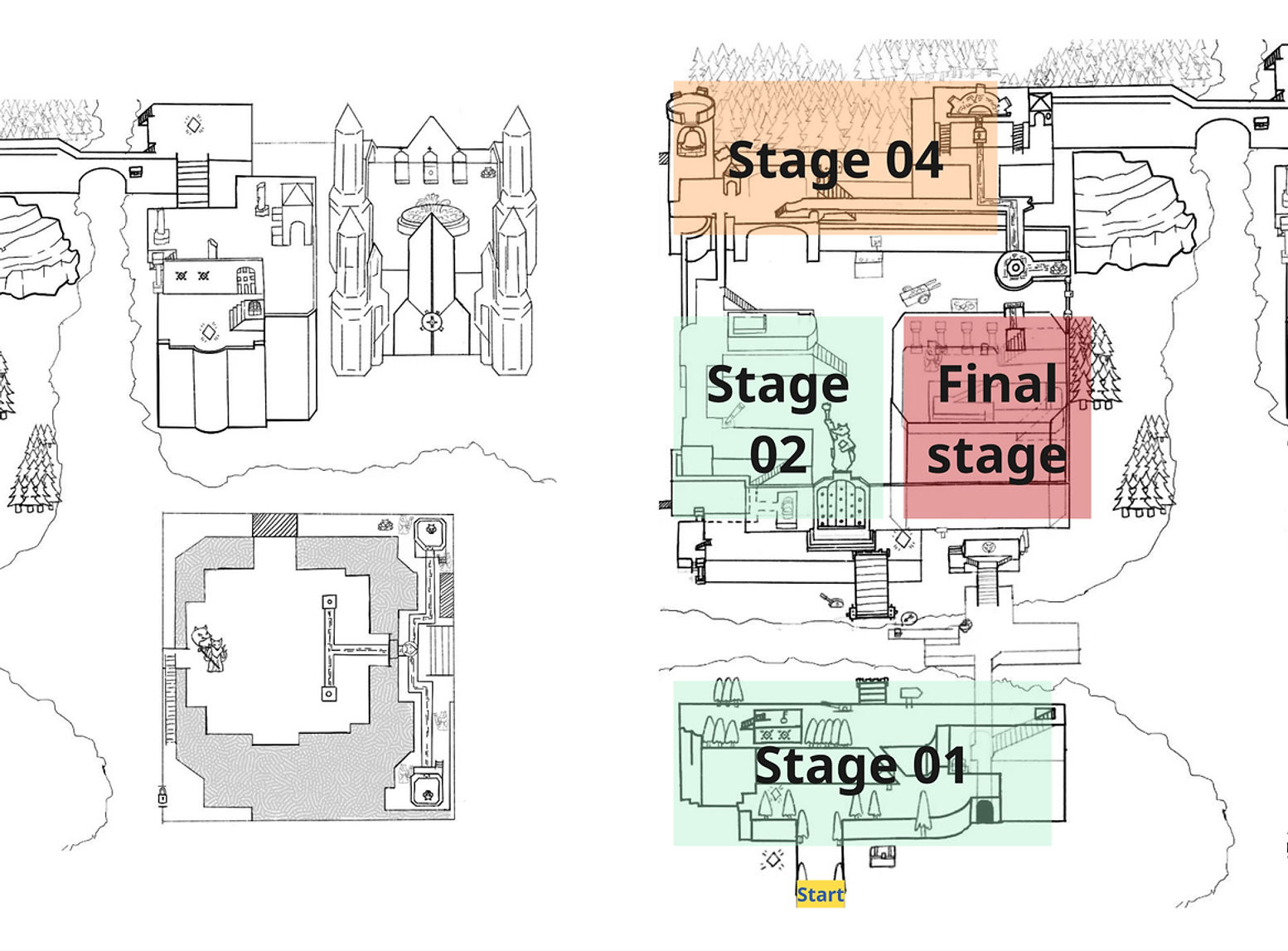
Design a single level for a TUNIC-inspired top-down action-adventure set in a forgotten, hostile enclosed city.
The player infiltrates the city alone to rescue a woman named Melissa. -
The level must include:
-
A clear main route and area structure
-
At least one mid-level event
-
One boss encounter
-
A final rescue sequence
-
-
-
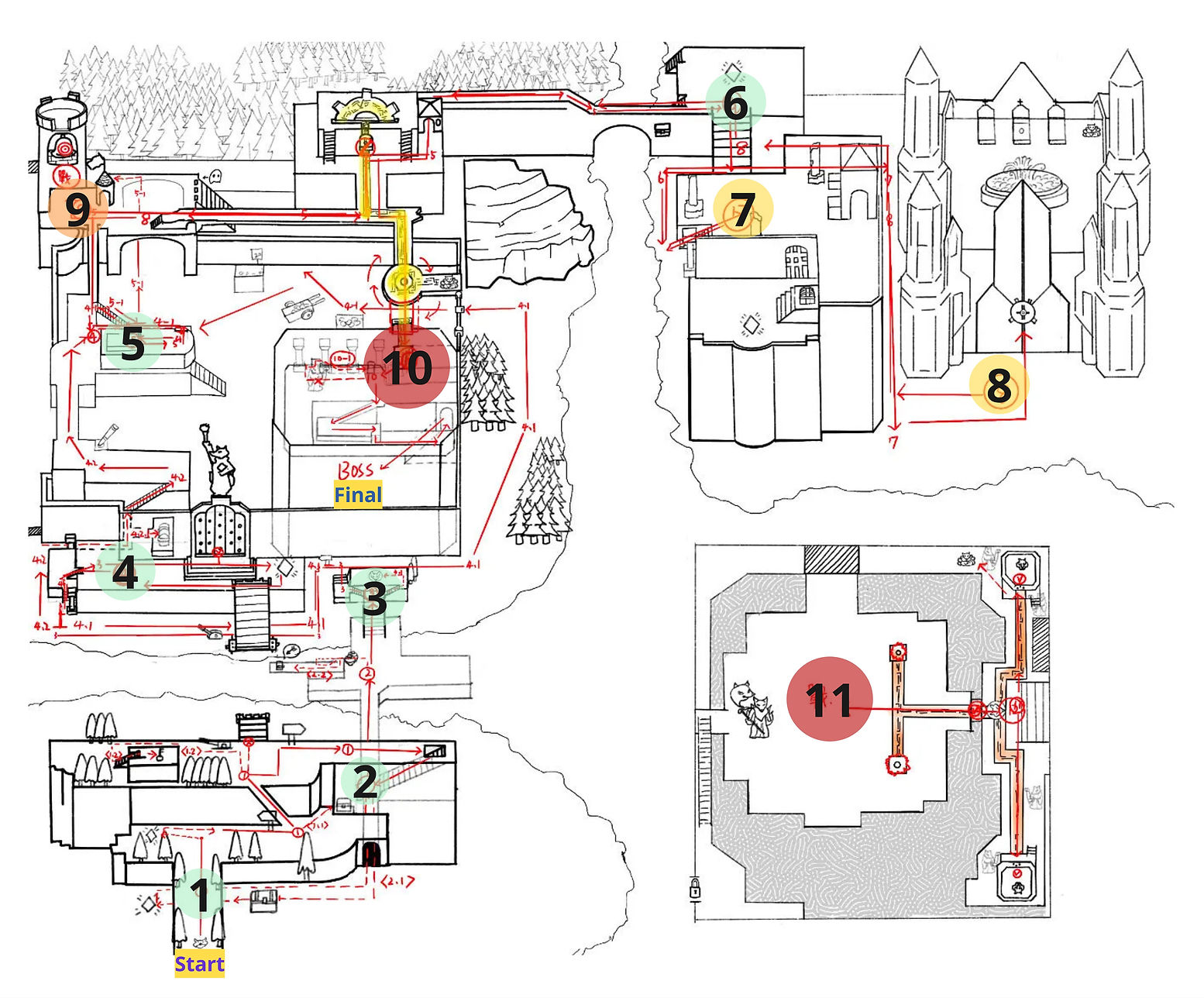
I submitted a required level design test before joining Acme Studio. To save your time, I put an overall review picture below. If you’re still interested in full version response (For more detailed pictures and description)
-
-
My Enroll-Test response – “Melissa and the Lost City”
-
Throughout the design, I focused on:
-
Loop-based, readable layout that rewards curiosity but keeps the main objective clear
-
Environmental storytelling via manual pages, landmarks and visibility of distant goals
-
Risk–reward exploration through optional secrets, shortcuts and combat challenges
-
Pacing that alternates between exploration, narrative beats, mid-level event and climactic boss play
-
-
My Responsibilities
-
Level concept & thematic framing (“Melissa and the Lost City”, Beowulf-inspired arc)
-
City layout, route and area planning (village → outskirts → market / cathedral / upper districts → castle)
-
Design of events and progression (engine activation, mid-level memory fragment, branching endings)
-
Encounter and boss design (enemy placement, mini-boss watchtower fight, final possessed-Melissa battle)
-
Creation of level maps, flow diagrams and written design rationale for the test submission
-
-
LevelDesignerEnroll Test & My Answer
.jpg)
This project is a co-op, top-down action roguelite game inspired by Hades. Mix and match weapons, skills, and synergies to craft unique builds, coordinate with your team, and dive into fast, high-intensity encounters that reward experimentation and mastery.
About
This section outlines the broader context of my work at Acme Studio, where I serve as the sole Level Designer. I’d be more than happy to answer any questions you may have—whether you’re curious about how I design level layouts and gameplay systems, how I translate design intentions into clear and actionable requirements for developers, or how I collaborate and communicate across departments, including with Level Artists.
Due to a confidentiality agreement, only a limited selection of images and materials can be displayed publicly on this website. If you’re interested in a more detailed overview or an in-depth discussion of my design process and project contributions, please feel free to contact me by email or schedule an online meeting—I’d be glad to share and explain more in person.
Here is also an example of one System Documentation I made during my work at AcmeGS.
For full size video please click Project Intro (above)
This clip was originally created for publisher outreach. All battle footage is real-time in-engine (Unreal Engine).
*© All rights reserved. Please do not use or re-upload for commercial purposes.
Responsibilities & Contributions of Project
04 / 2024 ~ 07 / 2025
-
Level & System Designer, writing files to show design goals of gameplay systems;
-
Rapid prototyping in UE Blueprint, shaping player flow and pacing, and driving cross-disciplinary iteration.
-
Collaborated with other parts of the team, such as artists, the Creative Director, and the Technical Director to drive level environments and gameplay functionality from written specs and prototypes to production implementation.
End-to-End Level Progression Flowchart
04 / 2024
My Role
-
In collaboration with the Narrative Designer,synthesized the narrative framework and the combat level architecture into a unified progression model.
Outcome
-
Formalized this model as process and structure diagrams to support internal design reviews and cross-department communication (design, engineering, art, and UX).
This diagram illustrates the end-to-end level progression, showing section-level branches, sub-camp loops, and boss-gate conditions.
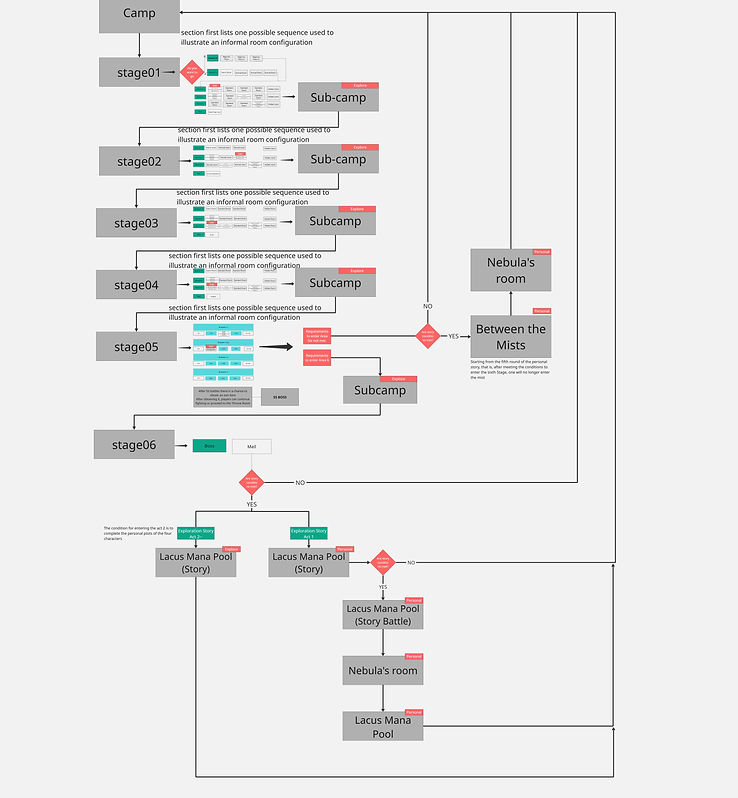
For full size please click the image
Randomized Level Structure System Design Doc
04 / 2024 ~ 06 / 2024
System Design | Design & Implementation
My Role
Sole Level & Systems Designer; defined structure rules, pacing targets, and LD/LA sublevel handoff.
Design Goal
-
The goal was to create replayable yet non-repetitive combat experiences across maps, while optimizing production resources such as art workload. The focus was on quality and variation rather than sheer map quantity.
Approach
-
Room Structure & Logic: Defined a taxonomy of room types (Entrance, Connector, Combat, Elite, Recovery, Shop, Boss) with clear selection constraints — no duplicates within a section, per-stage limits, and automatic recovery room injection after high-intensity segments.
-
Systematic Level Workflow: Maintained consistent map shapes while varying combat layouts (trap placement, obstacles, and spatial configuration). Formalized LD sublevels (blockout, traps, spawn locators) and mirrored them with LA sublevels (set dressing, lighting), supported by a detailed handoff checklist.
-
Technical Implementation: Created flowcharts for stage progression and built data schemas for room selection and seeding logic, exposing tunable parameters for efficient design iteration and team review.
Outcome
-
The structure met the design goals and was fully compatible with Unreal Engine’s level system, gaining immediate approval from the Lead Developer.
-
Enabled Level Artists to easily understand and implement level logic, naturally shaping a clear and efficient cross-discipline workflow.
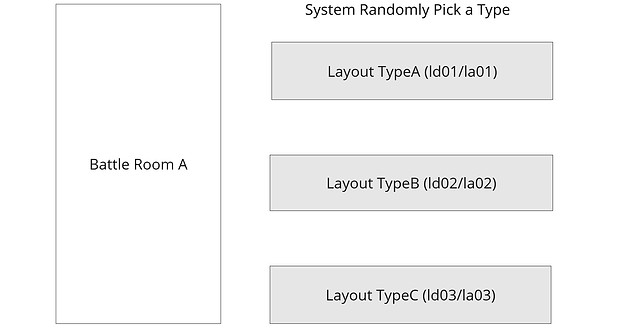
Detailed structure please click the image above
RandomSpawnMob/UnitsSystemDesign
05 / 2024 ~ 06 / 2024
Core Level System | Design & Implementation
My Role
-
Worked closely with the Game Director, Developer Lead, and cross-functional teams across Engineering, Art, and Design to align system goals and implementation feasibility.
Design Goal
-
To design a data-driven level and enemy spawn system capable of generating diverse combat experiences with controlled pacing.
-
By analyzing and deconstructing Hades level scripts, the goal was to derive key procedural parameters and logic patterns, then adapt them into a scalable system tailored to this project’s gameplay structure and production pipeline.
Scope
-
Core Controls: Defined encounter parameters including EncounterDifficulty, ActiveEnemyCountCapMin/Max, Min/MaxEnemyType, MaxEliteType, and DisasterLevelRamp, outlining their interdependencies and tuning hierarchy.
-
Selection Pipeline: Designed the processing flow UnselectedGroup → SelectedGroup → ForSpawnGroup, integrating computation of TotalEnemyFSCounts to maintain difficulty consistency across runs.
-
Spawn Logic: Specified branching behaviors for First Spawn (Prespawn/Dynamic) and Subsequent Spawn (Dynamic/Reinforce), detailing triggers, thresholds, and counter update mechanisms to balance pacing and variety.
Approach
-
Room Structure & Logic: Defined a taxonomy of room types (Entrance, Connector, Combat, Elite, Recovery, Shop, Boss) with clear selection constraints — no duplicates within a section, per-stage limits, and automatic recovery room injection after high-intensity segments.
-
Systematic Level Workflow: Maintained consistent map shapes while varying combat layouts (trap placement, obstacles, and spatial configuration). Formalized LD sublevels (blockout, traps, spawn locators) and mirrored them with LA sublevels (set dressing, lighting), supported by a detailed handoff checklist.
-
Technical Implementation: Created flowcharts for stage progression and built data schemas for room selection and seeding logic, exposing tunable parameters for efficient design iteration and team review.
-
Reference Analysis: Deconstructed and studied level-related scripts from Hades to analyze its level parameters and enemy spawn logic. Based on the insights gained, designed and authored a tailored level spawn system document aligned with this project’s gameplay requirements.
Outcome
-
Delivered a robust and scalable spawn system that supported procedural encounter generation and data-driven balancing.
-
The system was adopted as the foundation for combat pacing logic and became a reference model for subsequent level design modules.
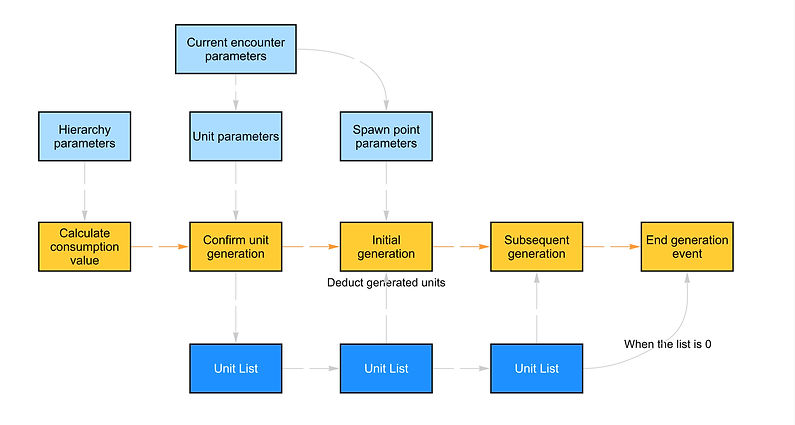
System Logical Diagram
FullDesignFile (translated ver.) please click the image
Level Cinematic & Event Design
04 / 2025 ~ 07 / 2025
My Role
-
Acted as the bridge from concept art to playable systems, aligning with the Game Director, Creative Director, and Lead Developer to connect visual storytelling with level-system logic.
What I did
-
After concept release, consolidated concept art → defined level shots and pacing → decomposed into concrete requirements for Engineering, VFX, Animation, and UI.
-
Structured the mechanics with a two-phase model—Selection (enemy-set filtering) and Spawn (dispatch & gating). Specified key controls (e.g., EncounterDifficulty, ActiveEnemyCountCapMin/Max, Min/MaxEnemyType, MaxEliteType, DisasterLevelRamp) and the branching for First Spawn (Prespawn/Dynamic) and Subsequent Reinforce with objective thresholds.
-
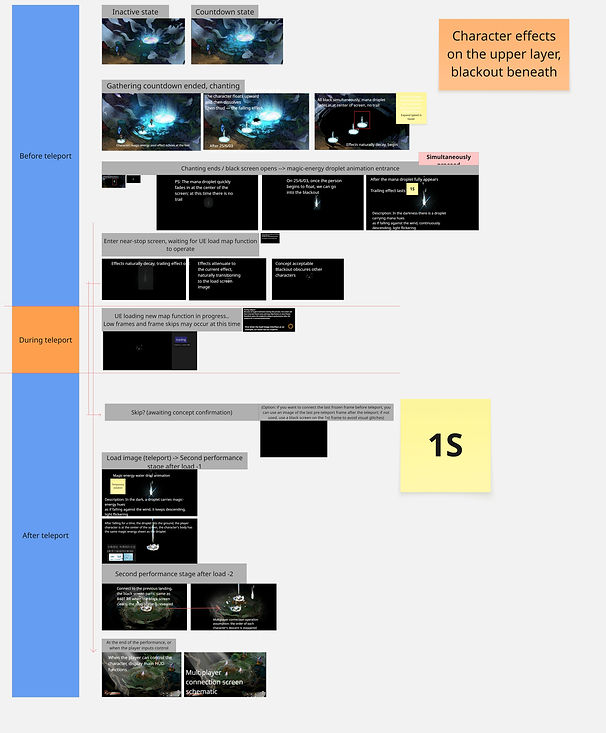
Converted every screen/state & timing cue—e.g., teleport → blackout → mana-droplet reveal → HUD shimmer → staggered multiplayer arrival—into flowcharts and requirement checklists for review and sign-off.
-
LD_collaborated with CreativeDirector and ConceptArtist
Deliverables
-
Itemized specs and interfaces for Engineering/VFX/Animation/UI; post-meeting minutes were published on the team wiki and tickets were filed to each department.
Execution
-
Drove alignment using parameterized, time-sequenced diagrams; validated and demo the act with Unreal Engine Blueprint prototypes and test cases linking pressure thresholds → spawn cadence → on-field caps.
Outcome
-
Shortened the path from concept to implementation, reduced cross-team rework, and established reusable templates (parameter panels & flow patterns) for future levels.
Level & Systems Designer | Integration of Cinematic Flow
.jpg)
Please click the image for larger diagram
UE5 Prototype Implementation & Interdiscplinary Workflow
Leveraged Unreal Engine’s Blueprint system to construct interactive level components, enabling fast iteration and functional testing during early design stages.
-
Responsible for designing the mechanics of all the functional level objects
-
Responsible for authoring requirement documents for all functional level objects and 3D VFX assets.
-
Validation & Iteration: Built playable proofs with UE Blueprint and ran a loop of Concept → Prototype → Playtest → Feedback; tuned player flow, triggers, and resource economy to hit pacing/difficulty targets and standardized rules/data formats for reuse.
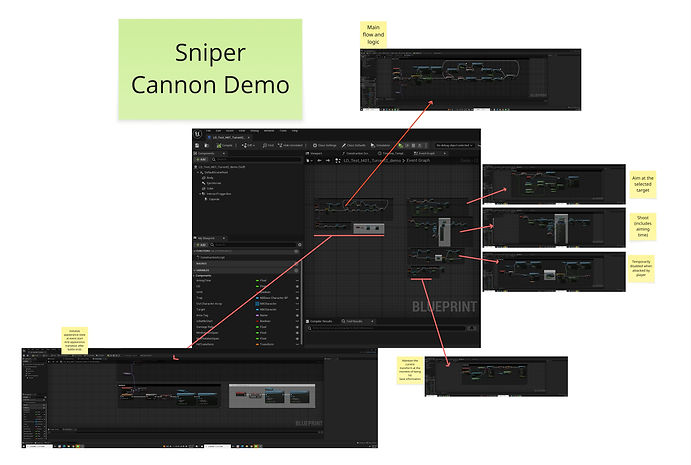
Showing my capability of using UE blueprint function .For full size please click the image
Demostrate a Trap prototype by using Blueprints and make it feasible to formal battle system
Design Logic for Randomized Room Selection
02 / 2025
-
Randomization Rules: Designed selection constraints for room types and LDs (max occurrences per stage, no duplicates within a section), plus an “exclude-already-used LD” rule to avoid repetition within a single run.
-
Enemy Spawn Data Strategy: Planned distinct spawn tables per LD within the same room type and contextual variants per section for the same LD. Drove discussions on where to mount data and place battle areas at edit-time/run-time;
-
Led the design of parameter computation and assignment logic based on engineers' opinion.
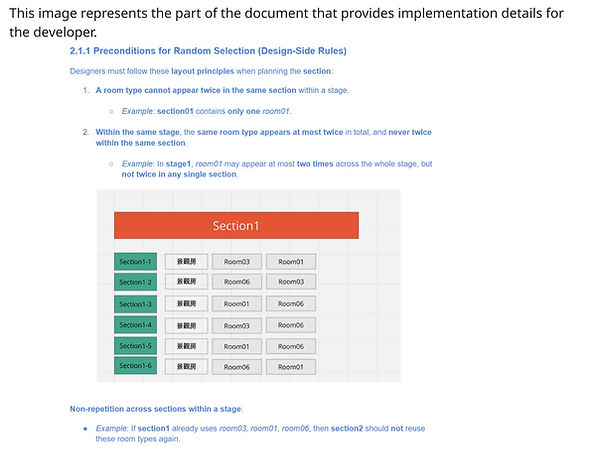.jpg)
For full structure estimation please click the image above(translate version)
Enemy Spawn Data Strategy & Implementation
Composition of each section of Levels
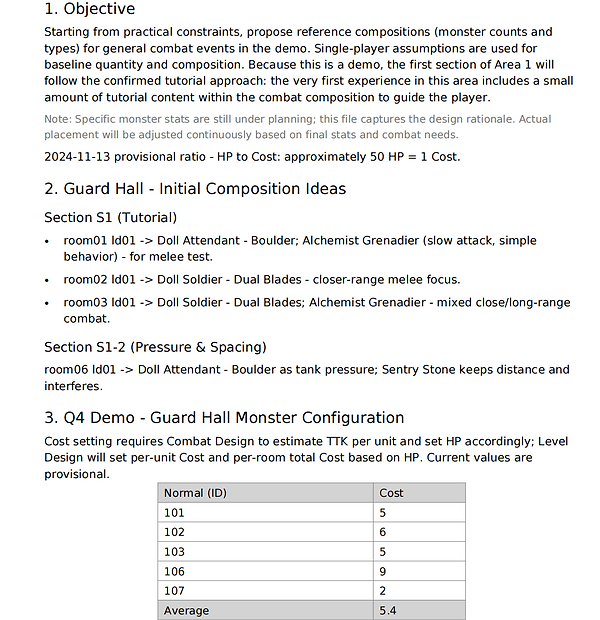
Document of Mob arrangements description for Game Director
Part of the file recording my ideas of mobs on certain levels
For full file please click the image above(translate version)
Level Layering & Production Pipeline Showcase
-
Level Layering & Pipeline: Established the collaboration flow between LD sublevels (blockout, traps, spawn locators) and LA sublevels (art replacement, lighting). I owned LD whitebox and internal tests before handing off to level artists for LA production.
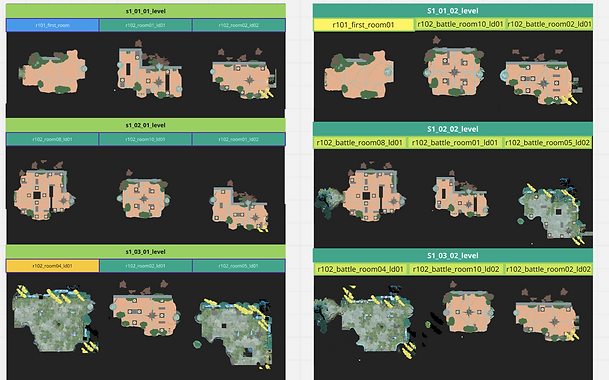
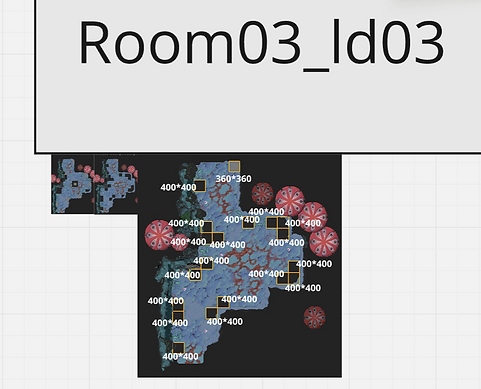
Level battle layouts' name
Sections of Level Layouts
Details of each type of battle layouts
Exchange or record my work or requirement to level artist by Miro Board
For full size please click the image above, Due to Security Duty, show a limit amount of my works